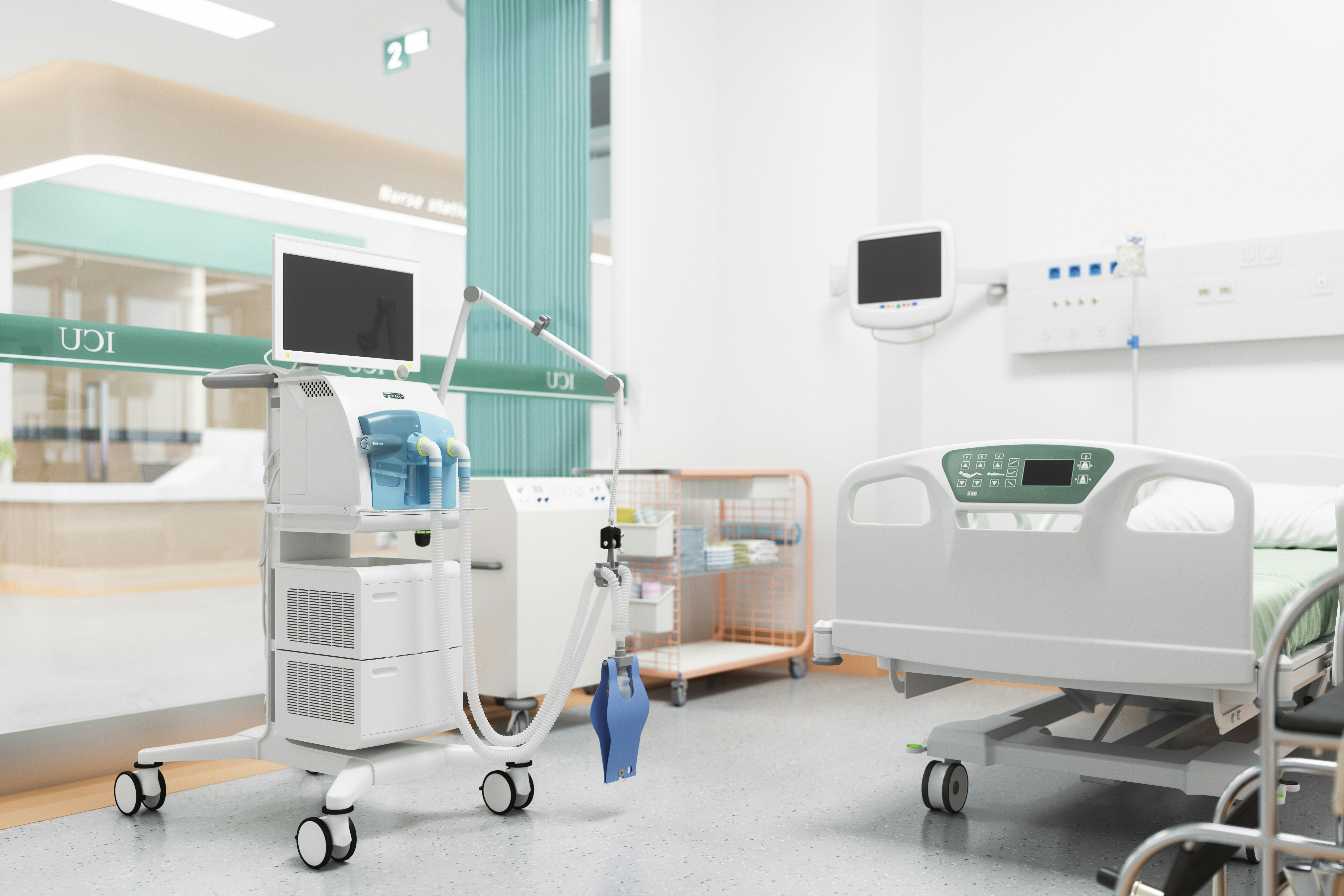
The U.S. healthcare market is entering a period of sustained transformation. Demographic shifts, rising utilization, workforce pressures, and rapid technological advancement are reshaping how and where care is delivered. For architects, these forces are not only influencing building typologies and design strategies but also redefining where healthcare investment is concentrated across the country.
This article outlines the current state of the U.S. healthcare market, forecasts demand from a built-environment perspective, identifies high-growth states and cities attracting healthcare investment, and highlights the architectural trends shaping healthcare facilities over the next decade.
Healthcare remains one of the largest and fastest-growing sectors of the U.S. economy. National healthcare expenditures continue to rise faster than GDP, driven by an aging population, increased acuity, and expanded access to care. By the end of the decade, adults aged 65 and older will represent the fastest-growing patient demographic, placing sustained demand on chronic care, surgical services, oncology, cardiovascular treatment, and behavioural health.
At the same time, healthcare systems face mounting operational pressures. Labor shortages, reimbursement constraints, and rising construction costs are forcing owners to be more strategic with capital investments. Rather than focusing exclusively on inpatient bed growth, systems are reallocating resources toward outpatient networks, modernization of existing facilities, and targeted specialty care environments.
Near-Term Outlook (2025–2027)
In the near term, architectural demand remains strong, with an emphasis on outpatient-driven growth and facility optimization. Key project types include:
Renovation and adaptive reuse play a critical role during this period. Many health systems are reinvesting in existing campuses to upgrade HVAC systems, improve infection control, modernize patient rooms, and convert underutilized inpatient space into higher-yield outpatient or procedural uses. Speed to market is increasingly important, driving interest in modular construction, standardized room layouts, and repeatable facility prototypes.
Looking further ahead, healthcare delivery will continue to decentralize. Rather than expanding single hospital towers, systems are investing in distributed care models supported by regional hubs and outpatient satellites. Architectural demand will increasingly favor:
Sustainability, resilience, and energy performance will become baseline expectations, particularly for large health systems and publicly funded projects.
While healthcare demand is national, investment is not evenly distributed. Several states and metropolitan areas stand out due to population growth, demographic trends, and active healthcare capital pipelines.
Texas consistently ranks among the top states for healthcare construction and investment. Rapid population growth, business migration, and an expanding senior population are driving demand across major metro areas.
Architectural implications: High demand for medical office buildings, ambulatory care centers, inpatient expansions, and large-scale campus planning. Flexibility and phased delivery are critical in these fast-growth markets.
Florida’s combination of population growth and aging demographics makes it one of the most active healthcare markets in the country.
Architectural implications: Expansion of existing campuses, vertical additions, and new outpatient clusters with strong emphasison patient experience, resilience, and storm-hardening strategies.
Despite higher regulatory and construction costs, California remains a major healthcare investment market.
Architectural implications: Opportunities forlarge-scale hospital design, retrofit and modernization work, integrated ambulatory campuses, and high-performance sustainable design.
The Research Triangle continues to attract healthcare investment tied to academic medicine, research, and population growth.
Architectural implications: Demand for campus master planning, complex clinical programming, and mixed-use health districts integrating research, education, and patient care.
New York remains one of the most active states for healthcare construction approvals and capital planning.
Architectural implications: Expertise in renovation, vertical circulation, resilient MEP systems, and urban healthcare design is critical.
Several secondary and mid-sized markets are seeing outsized healthcare investment.
Omaha, Nebraska is home to one of the largest healthcare construction projects in the Midwest, centered on a major hospital and academic campus.
North Charleston, South Carolina is developing a new regional hospital campus to serve growing coastal populations.
Architectural implications: Greenfield hospital campuses, institutional-scale projects, and long-term phased development strategies.
Key Design Trends Shaping Healthcare Architecture
Flexibility and Adaptability
Healthcare facilities must evolve as care models change. Universal room concepts, modular planning grids, and flexible MEP systems are now standard expectations.
Outpatient-First Planning
With care shifting away from inpatient settings, outpatient environments demand high levels of efficiency, clarity, and patient comfort.
Behavioral Health and Trauma-Informed Design
Growing demand for behavioural health services is driving specialized facility design focused on safety, dignity, and healing environments.
Infection Control and MEP Investment
Mechanical systems, air quality, and touchless technologies remain top priorities for both new construction and renovation.
Staff-Centered Design
Designing for workforce well-being—through respite spaces, ergonomic layouts, and efficient circulation—is increasingly viewed as an operational necessity.
Patient Experience, Equity, and Biophilia
Natural light, access to nature, inclusive wayfinding, and culturally responsive design are now baseline expectations.
Digital and Infrastructure Readiness
Facilities must support telehealth, AI-assisted diagnostics, and future technologies through robust power, data, and spatial planning.
Sustainability and Resilience
Energy efficiency, electrification readiness, and climate resilience are integral to modern healthcare design and master planning.
The U.S. healthcare market will continue to grow, but its geography, delivery models, and architectural priorities are shifting. Investment is increasingly concentrated in fast-growing Sun Belt states, expanding secondary markets, and urban centers focused on modernization rather than expansion.
For architects, the opportunity lies in delivering flexible, technically sophisticated, and human-centered environments that respond to both regional demand and long-term change. Firms that align design excellence with operational insight, adaptability, and resilience will be best positioned to lead the next generation of healthcare architecture.